
The Stages of Orthodontic Treatment Explained: Your Roadmap to a Perfect Smile
July 20, 2026
Choosing to straighten your teeth can boost your confidence and improve your oral health. According to the American Association of Orthodontists, millions of people in the United States are currently undergoing orthodontic care, with adults representing over 25 percent of these patients. Understanding what lies ahead can demystify the process and help you feel entirely prepared.
If you are ready to begin this life-changing path, we invite you to visit our dental office and experience personalized care at its finest. Here at Dunn Orthodontics, led by our premier board-certified orthodontist in Roseville, Dr. Marc Dunn, we specialize in crafting custom-tailored treatment plans that seamlessly integrate into your daily life. Leveraging years of clinical excellence, our practice combines state-of-the-art technology with a compassionate touch to guide you comfortably through every milestone of your smile transformation.
Stage 1: The Diagnostic Consultation & Treatment Planning
What Happens During Your First Orthodontic Consultation?
The initial stage of orthodontic treatment focuses on gathering comprehensive clinical data to analyze your unique dental and facial structures. This phase involves taking 3D digital impressions, digital X-rays, and facial photographs to construct a highly customized biomechanical roadmap.
Our clinical diagnostic phase begins with a detailed visual and digital evaluation. By using advanced intraoral scanners, we eliminate the need for messy, uncomfortable traditional putty impressions. These high-definition 3D models allow us to map out the exact movement of your teeth before any appliance is placed. Simultaneously, panoramic and cephalometric X-rays are analyzed to assess the health of your jawbones, tooth roots, and surrounding periodontal tissues.
For residents navigating life near the busy Galleria or picking up local treats around Old Town, scheduling this initial assessment is the perfect way to invest in your long-term wellness. A trusted orthodontist in Roseville can evaluate how localized habits, water quality, and regional dental history might influence your overall treatment path, ensuring your plan is designed to fit your active lifestyle.
Through this extensive assessment, Dr. Dunn determines the precise classification of your malocclusion (such as an overbite, underbite, or crowding) and presents a bespoke treatment strategy.
Stage 2: The Active Placement Phase
How are orthodontic appliances placed on your teeth?
The active placement stage is the milestone where your custom-engineered orthodontic appliances, whether traditional braces or clear aligners, are safely secured or fitted to your teeth. This transition initiates the controlled, continuous force required to guide your teeth into ideal alignment.
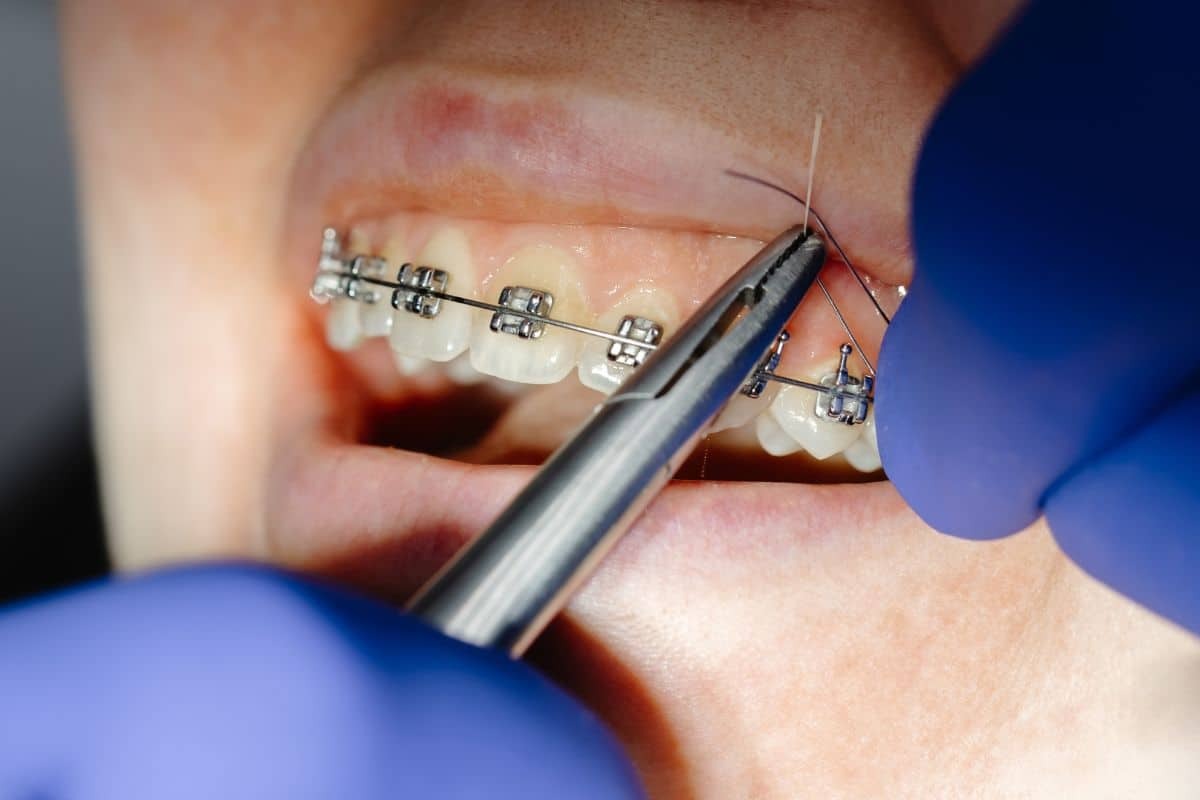
For patients receiving traditional metal or clear ceramic braces, this clinical procedure is precise and entirely non-invasive. The surfaces of your teeth are thoroughly cleaned, conditioned, and primed with a specialized dental adhesive. Individual bracket bases are then positioned with microscopic accuracy on each tooth before being cured with a high-intensity light. Finally, a flexible archwire is threaded through the brackets, which are held in place by tiny ligatures or self-ligating clips to begin applying mild, constant pressure.
If your customized diagnostic plan points toward a modern, wire-free option, you might transition into Invisalign® clear aligners. Utilizing a series of clear, medical-grade thermoplastic trays, this advanced therapy offers a sleek, removable, and highly aesthetic alternative. No matter which appliance is chosen, the active placement phase marks the exciting physical beginning of your smile transformation.
Stage 3: Active Orthodontic Movement & Periodic Adjustments
What happens during orthodontic adjustment appointments?
The active movement stage is the longest phase of orthodontic treatment, during which your teeth are progressively shifted into their optimal positions. Regular clinical visits are required to adjust archwires, monitor tissue health, and update aligner sequences.
As you enjoy weekend strolls through Royer Park or grab your favorite local wood-fired pizza, your orthodontic appliances will be working continuously behind the scenes. Achieving a healthy bite is a gradual biological process. The continuous pressure applied by your brackets or aligners stimulates a natural process called bone remodeling. On the pressure side of the tooth, specialized cells called osteoclasts break down bone tissue to allow the tooth to move. On the tension side, cells called osteoblasts build new bone matrix to anchor the tooth in its new position.
To maintain this highly controlled physiological process, you will return to our office every four to eight weeks. During these visits, we change archwires, modify elastic configurations, or deliver your next sets of aligners. Partnering with an experienced orthodontist in Roseville ensures these frequent check-ins are convenient, highly efficient, and tailored to monitor your progress with minimal disruption to your busy schedule.
Stage 4: Debonding (The Reveal)
What happens when your braces are removed?
Debonding is the highly rewarding clinical process of safely removing brackets, archwires, and adhesive resins from your teeth once alignment is complete. This session reveals your beautifully aligned teeth and prepares your dentition for the stabilization phase.
The physical removal of braces is a rapid and entirely comfortable procedure. Using specialized orthodontic instruments, the doctor gently pinches the base of each bracket. This safely breaks the adhesive bond without causing any damage to your natural tooth enamel. Once all brackets are removed, a high-speed polishing handpiece is used to clear away any remaining microscopic bonding resin, leaving your teeth exceptionally smooth and clean.
For patients utilizing clear aligners, this stage involves the quick and painless polishing away of the small, tooth-colored composite attachments that were temporarily bonded to your teeth to assist with complex movements.
Stage 5: Retention & Long-Term Stabilization
Why is the retention phase crucial after orthodontic treatment?
The retention phase is a vital, lifelong stage of orthodontic care designed to stabilize teeth in their new, corrected positions. Without retainers, the natural elasticity of periodontal fibers can pull teeth back toward their original misalignment.
Once your active treatment appliances are removed, the bone matrix and surrounding periodontal ligaments around your teeth are still highly malleable. Your custom-fitted retainer holds your teeth securely in place, giving the bone tissue ample time to calcify and completely stabilize. Failing to wear your retainer as directed can result in “relapse,” causing teeth to shift back to their old positions.
We provide custom-molded retainers, including removable clear retainers, classic wire retainers, or discreet bonded wires hidden behind your front teeth, to ensure your stunning results last a lifetime.
Book an Appointment to Begin Your Smile Journey
Your path to a healthier, more beautiful smile begins with a personalized diagnostic assessment. Every individual’s dental anatomy, bone density, and facial structure require an individualized approach.
To discover the ideal orthodontic treatment path for your unique needs, please book an appointment at Dunn Orthodontics today. Our team is ready to guide you through every stage of your treatment with the highest level of clinical expertise and care.
FAQs
How long does the average orthodontic treatment take?
Active orthodontic treatment typically spans twelve to twenty-four months, depending on the severity of the malocclusion. Minor cosmetic adjustments may conclude sooner, while complex structural corrections require more time.
Is the placement of braces painful?
The physical placement of orthodontic brackets is entirely painless and does not require anesthesia. You may experience mild muscular soreness and pressure for a few days as your teeth adjust.
How often do I need to visit the orthodontist during treatment?
Most patients require clinical progress evaluations every four to eight weeks. These frequent adjustments allow us to modify archwires, check tissue health, and keep your treatment on schedule.
Can I still play sports and instruments with braces?
Yes, you can safely play sports and musical instruments during active orthodontic treatment. We highly recommend wearing a protective, custom-fit orthodontic mouthguard during all athletic activities to prevent tissue lacerations.
Do clear aligners work as effectively as traditional braces?
Yes, modern clear aligners like Invisalign are highly effective for correcting a wide range of mild-to-severe malocclusions. Dr. Dunn will evaluate your anatomical needs to determine the best treatment method.
What foods must I avoid during my orthodontic treatment?
If you wear traditional brackets, you must avoid extremely hard, sticky, or chewy foods like popcorn, nuts, and caramel. Invisalign patients have no restrictions, as aligners are removed before eating.
Why do my teeth feel slightly loose during active treatment?
Mild tooth mobility is a completely normal biological response to active orthodontic pressure. As bone remodeling occurs, the periodontal ligament temporarily widens, stabilizing once your retention phase begins.
Recent Posts
October 27, 2026
Why Does Your Bite Feel Uneven? The Orthodontic Problem You May Be Missing
October 16, 2026
Braces After 40: Is It Too Late to Correct Years of Crooked Teeth?
October 16, 2026
One Tooth Sticking Out? When a Small Alignment Problem Needs Attention
October 16, 2026
Can Invisalign Fix an Overbite, or Do You Really Need Braces?
October 16, 2026
Does Your Child Have an Underbite? What Parents Need to Know Before Age 10
Categories
Orthodontics (51)