
Can Invisalign Really Fix Crossbite- Here’s What Roseville Patients Should Know
April 22, 2026
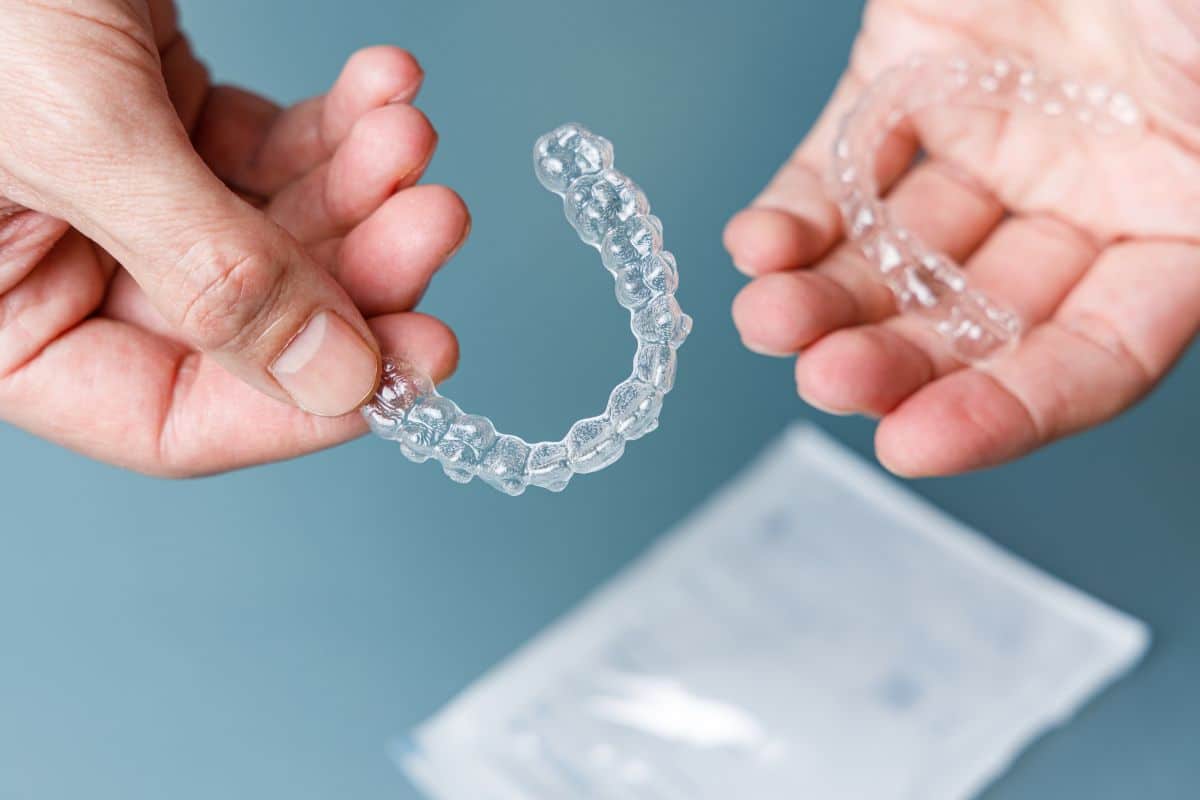
Does your top jaw feel like it’s slightly off? Do you notice your teeth clicking when you chew, or does your jaw feel sore after a meal? You might be dealing with a misaligned bite, and if so, you are far from alone.
Bite problems like this affect millions of people across the U.S. They can make eating uncomfortable, cause uneven wear on your teeth over time, and even affect how you speak. Many people also feel self-conscious about the way their smile looks because of it. However, modern orthodontic treatment has come a long way, and Invisalign has made fixing these issues more convenient and discreet than ever before.
If you’ve been wondering whether these aligners can actually fix a bite problem like this or whether you need metal braces, this blog will walk you through everything you need to know. We’ll break down what causes this type of misalignment, what happens if you leave it untreated, and how today’s aligner technology can move your teeth into the right position.
At Dunn Orthodontics in Roseville, Dr. Marc Dunn and his team work with teens and adults every day who are dealing with exactly this kind of bite issue. If you’re ready to find out whether clear aligners are the right move for you, keep reading.
Meet Dr. Marc Dunn — Roseville’s Trusted Orthodontist
Dr. Marc Dunn is a board-certified orthodontist who completed his dental education and earned his Master of Science in Orthodontics from Loma Linda University in 1998. He is an active member of the American Dental Association, the American Association of Orthodontists, the Pacific Coast Society of Orthodontics, and the Sacramento District Dental Society.
Dr. Dunn is recognized as a top 1% Invisalign® provider, and he uses digital scanning and advanced imaging technology to create precise, personalized treatment plans. His practice has helped countless patients across Roseville, Rocklin, Lincoln, Granite Bay, and surrounding communities achieve healthier, better-aligned smiles.
Ready to take the first step? Schedule your consultation with Dr. Dunn today.
What Is a Crossbite and Why Does It Happen?
It is a type of bite misalignment where one or more of your upper teeth sit inside your lower teeth when you close your mouth. Normally, your upper teeth should rest slightly outside your lower teeth. When that relationship is flipped even for just one tooth, it’s considered a crossbite.
There are two main types:
• Anterior crossbite — affects the front teeth. One or more upper front teeth sit behind the lower front teeth. This is different from an underbite, which involves the entire jaw.
• Posterior crossbite — affects the back teeth. The upper back teeth bite down inside the lower back teeth, which can happen on one or both sides of the mouth.
So what causes this kind of misalignment? Several factors can contribute:
• Genetics, if a parent had this issue, there’s a higher chance their child will too
• Childhood habits like prolonged thumb-sucking, which can narrow the upper jaw over time
• Mouth breathing due to chronic nasal congestion or enlarged tonsils
• Baby teeth that did not fall out at the right time, affecting how permanent teeth come in
• Differences in how the upper and lower jaws grew during development
It’s worth noting that this issue affects roughly 1 in 5 people, and it doesn’t always cause obvious pain early on. That’s why many people go years without realizing they have a problem.
What Happens If You Don’t Fix a Crossbite?
Leaving a bite problem unaddressed might not seem like a big deal, but over time, it can create a range of issues that go well beyond cosmetics:
• Uneven tooth wear — the teeth that are out of alignment absorb more pressure than they should, which causes them to wear down faster than the others
• Jaw pain and TMJ issues — when your bite is off, your jaw muscles compensate. This can lead to clicking, soreness, and even temporomandibular joint (TMJ) disorders
• Gum recession — the uneven pressure from a misaligned bite can put stress on the gum tissue around affected teeth, leading to gum problems over time
• Chewing difficulty — food may not break down properly, which can cause digestive issues as well
• Speech challenges — some people develop speech patterns or impediments tied to how their teeth meet
• Self-confidence — a visibly shifted bite or crooked front teeth can affect how someone feels about their smile in photos and in person
The earlier you address this kind of misalignment, the simpler the treatment tends to be. Adults can absolutely still be treated, but the process may take a little longer since the jaw is fully developed.
Can Invisalign Fix a Crossbite? Here’s the Honest Answer
Yes, in many cases, transparent aligner therapy can correct this type of bite problem. Here’s a breakdown of what clear aligners can typically handle:
Anterior (Front Teeth) Misalignment
Single-tooth or mild multi-tooth anterior issues respond very well to aligner therapy on its own. The aligners gradually shift the upper front teeth forward while guiding the lower teeth back into a proper relationship. Many patients achieve full correction without any additional appliances.
Posterior (Back Teeth) Misalignment
Mild posterior misalignment can often be treated with aligners, sometimes combined with small rubber bands called “cross elastics” that help guide teeth into place. For moderate to severe cases where the upper jaw is significantly narrower than the lower, an expander device may be recommended alongside aligner therapy. Your orthodontist will determine this at your initial evaluation.
Severe or Skeletal Cases
When the misalignment stems from a significant jaw discrepancy rather than just tooth position, surgical intervention may be required before or alongside orthodontic treatment. These cases are less common, and your orthodontist will walk you through the options clearly.
If you’re in the Roseville area and wondering which category you fall into, the only way to know for sure is a proper evaluation. A good quality and durable option of Invisalign in Roseville is available at our dental office, and our orthodontist offers consultations so you can get a clear picture of your options without any pressure.
Why Choose Transparent Aligners Over Traditional Braces for Bite Correction?
Traditional metal braces have been correcting bite problems for decades, and they remain a solid option for complex cases. But for mild to moderate misalignment, modern aligner therapy offers several advantages that many patients, especially teens and working adults, find appealing:
• Nearly invisible — the aligners are made from clear, smooth plastic. Most people around you won’t notice you’re in treatment
• Removable — take them out to eat, brush, and floss. No food restrictions and no struggling with floss threaders
• Comfortable — no metal brackets or wires to irritate your cheeks and gums
• Predictable results — treatment is digitally mapped out in advance, so you can actually see a preview of where your teeth are headed before you start
• Easier oral hygiene — since the aligners come out, keeping your teeth clean during treatment is straightforward
Aligner therapy only works when you wear the aligners consistently. You need to keep them in for 20 to 22 hours per day to stay on track. If you’re committed to that, results tend to follow.
Treatment time for bite correction with clear aligners typically ranges from 12 to 24 months, depending on the complexity of your case and how well you stick to wearing them.
Take the Next Step Toward a Healthier Bite
If you’ve been putting off treatment because you weren’t sure whether discreet aligners could actually fix your bite, now you know they can, in many cases. And the longer you wait, the more wear and strain your teeth and jaw absorb.
Visit our dental office in Roseville and let Dr. Dunn take a look. As a top Invisalign provider, he has the tools and the hands-on experience to evaluate your bite, explain your options honestly, and build a treatment plan that fits your life. Whether you’re a teen, a young adult, or well into adulthood, treatment is absolutely within reach.
Your Bite Problem Has a Solution — Right Here in Roseville
A misaligned bite is not just a cosmetic issue. It affects how you chew, how your jaw feels, how your teeth wear over time, and how confident you feel in your own smile. The encouraging part is that it’s treatable, and modern aligner therapy has made that treatment more accessible and comfortable than ever before.
Dunn Orthodontics is right here in Roseville, serving patients from across the area, including Rocklin, Lincoln, Loomis, Antelope, and Granite Bay. Don’t let another year go by watching your teeth wear unevenly or waking up with a sore jaw. Your smile deserves attention, and our dental office is ready to help.
Book an appointment today to schedule your FREE consultation at Dunn Orthodontics.
Frequently Asked Questions
1. Can a misaligned bite fix itself over time?
No. A misaligned bite does not correct on its own. Without treatment, the problem tends to worsen as your teeth continue to wear unevenly. Early evaluation by an orthodontist is always the right call.
2. At what age should someone get a bite misalignment evaluated?
The American Association of Orthodontists recommends an orthodontic evaluation by age 7. That said, teens and adults are treated successfully all the time. It is never too late to seek an evaluation.
3. How long does clear aligner treatment take for bite correction?
Treatment time typically ranges from 12 to 24 months, depending on the severity of the misalignment and how consistently you wear your aligners. Simpler cases can be resolved more quickly. An orthodontist can give you a more precise estimate after evaluating your bite.
4. Do I need to wear the aligners all day?
Yes. For treatment to stay on track, you need to wear your aligners for 20 to 22 hours per day. You remove them only when eating, drinking anything other than water, and brushing your teeth.
5. Will I need any additional appliances along with clear aligners?
It depends on the type and severity of your misalignment. Some patients with back-tooth misalignment may need small rubber bands called cross elastics or, in more complex cases, an expander device. An orthodontic evaluation will clarify exactly what your treatment requires.
6. Is clear aligner therapy painful?
Most people experience mild pressure or discomfort for a day or two when they switch to a new set of aligners. This is a sign that the aligners are working. It is generally much less uncomfortable than the soreness associated with metal braces adjustments.
7. Can teens use clear aligner treatment for bite correction?
Yes. Discreet aligner therapy is a suitable option for many teenagers. There are aligner systems designed specifically for teens, and the clear, removable format tends to appeal to younger patients. An orthodontic evaluation will determine whether it is the right fit.
Recent Posts
April 22, 2026
Can Invisalign Really Fix Crossbite- Here’s What Roseville Patients Should Know
April 15, 2026
How To Prepare For Your First Braces Appointment?
April 9, 2026
How Orthodontic Treatment Changes with Age: What Roseville Patients Need to Know
April 6, 2026
Dealing With Invisalign Discomfort: A Guide For Roseville Patients

March 24, 2026
What Smile Issues Can Invisalign Correct? A Roseville Dentist’s Guide
Categories
Invisalign (29)